Anyone who’s a reader has heard the term ‘classic’ book, or ‘classic’ literature. A ‘classic’ is defined by the Merriam-Webster dictionary as something that is either ‘serving as a standard of excellence or of recognized value’ or ‘historically memorable’ .
Now when people think of classic literature, titles such as Pride and Prejudice by Jane Austen, 1984 by George Orwell, or Jules Verne’s 20 000 Leagues Under The Sea come to mind. But there are so many other titles out there that it can get very overwhelming. So, the question is: where to start?
Well, you’ve come to the right place!
Here are five recommendations (all of which I have read) of readable, entertaining classic novels to get you started on your journey to discovering classic literature.
- The Hobbit/The Lord Of The Rings (J. R. R. Tolkien)
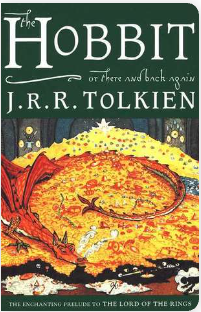
What is a hobbit, you may ask?
They are “a little people, about half our height (…). Hobbits have no beards. (…) They are inclined to be fat in the stomach, they dress in bright colours (…). [They] wear no shoes, because their feet grow natural leathery soles and thick warm brown hair like the stuff on their heads (which is curly); and laugh deep fruity laughs (especially after dinner, which they have twice a day if they can get it.)” – J. R. R. Tolkien, The Hobbit
The Hobbit is not only an amazing classic read, it’s also written as a children’s book, so it’s easy to read and easy to understand as well. The Hobbit follows the story of a hobbit named Bilbo Baggins, who goes on an adventure with thirteen dwarves and a wizard to the Lonely Mountain, to defeat a dragon named Smaug.
The land of Middle-Earth, in which this takes place, is a fantasy world to end all fantasy worlds, filled with a rich history and many kingdoms and races and conflicts.
The Lord of the Rings, on the other hand, is a trilogy that follows the nine members of the Fellowship of the Ring as they go on a journey to Mount Doom (basically the equivalent of hell) to destroy the One Ring, an artefact that has terrible power and consumes all those who possess it.
It is a more complex series (by which I mean it is filled with a great many more descriptions and can be tedious in places) but it is definitely worth it if you’d like to give it a shot!
- Pride and Prejudice (Jane Austen)
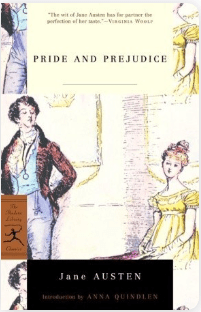
Pride and Prejudice is such an iconic and well-known title when it comes to classic literature.
It’s one of the first titles that people think of when they think about classic literature, and with good reason! It’s been made into various film adaptations (17, in fact!) and there have been numerous modern retellings.
Pride and Prejudice is the story of Elizabeth “Lizzie” Bennet and Mr Darcy. They meet at a ball when Mr. Bingley (Mr. Darcy’s hot and also conveniently eligible friend) moves into town and invites the Bennet family.
At first, Lizzie and Mr. Darcy do not get along. They bicker, and make snide remarks about each other and each other’s families, and so on and so forth. But as the story progresses, with all its ups and downs, you learn to care for all the characters and root for them as they grow and flourish.
- Frankenstein or The Modern Prometheus (Mary Shelley)
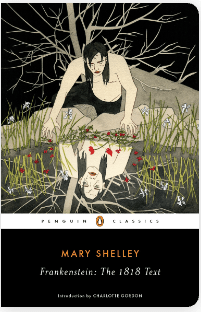
Fun Fact! Mary Shelley is believed to have invented the genre of science-fiction, however the term itself was not introduced until the 1920s.
Victor Frankenstein was a natural scientist; a biologist, if you will. He was obsessed with the idea of being able to create life. And he succeeded! He created what is now known as ‘Frankenstein’s Monster’, an eight-foot-tall creation out of old dead body parts (ew!), chemicals, and a mysterious spark.
You’d think that Victor would be so proud of himself to have created life, but alas, that was not the case. Victor had spent so much time on his work that his physical health was in a decline. But other than that, he was also so ashamed and terrified of his creation that it very nearly broke him. It was ugly. Hideous, even.
As you read, you end up sympathising with the monster and feeling nothing but terrible pity for Victor himself. Told from interesting points of view and in a tone that is quite easy to understand (even if the text comes from 1818), Frankenstein is truly a worthy read for one of your first classics.
- Jane Eyre (Charlotte Bronte)

I think we can understand what Jane Eyre is about just from the title, and you’d be right.
Jane Eyre was adopted by some distant family members, but wasn’t as loved as the other blood children of her aunt. She went to a low-quality boarding school and had to witness many terrible things, but when she graduated and got better opportunities, she finally found a job as a governess for an orphaned girl named Adele at a place for Thornfield Hall, which is run by a mysterious man named Mr. Fairfax.
Jane Eyre is a story about picking yourself up and making a life for yourself through many ups and downs. You can care for the characters, and follow the story quite easily as well.
The book was originally published with the author’s name as ‘Currer Bell’ instead of ‘Charlotte Bronte’ because in that time period it was more likely than not that a book would sell if it were written by a woman. The Bronte sisters (Charlotte, Emily, and Anne) all wrote and took up male names (Currer, Ellis, and Acton Bell), until 1850 when they revealed themselves.
Definitely check out Jane Eyre if Victorian England and romance are things that interest you!
- 20 000 Leagues Under The Sea (Jules Verne)

Jules Verne is one of the most well-known authors of the 1800s.
He wrote many books, including Journey to the Centre to the Earth, Around The World In 80 Days, and many more. For the sake of this recommendation, I will be talking about 20 000 Leagues Under The Sea.
A league is a nautical measurement which is equal to about 4.828 kilometres. The ocean is definitely not 20 000 leagues kilometres deep (that’s a lot of water pressure to sustain) but the title of this classic refers to the distance travelled around the world while being underwater (and that is a big, big distance).
It falls under the category of science fiction but it is also one of the books that is so ahead of its time that it could be released in the modern era and still have technology too advanced for us to comprehend.
20 000 Leagues is narrated by the French scientist Pierre Aronnax, who finds himself aboard the Nautilus with his trusty Conseil and master Canadian harpooner Ned Land after they fall overboard their ship and are unable to get back onto it. The Nautilus is a futuristic, high-tech submarine capable of surviving extreme depths and going speeds almost unthinkable to our modern times. The Nautilus is run by Captain Nemo (yes, like the fish, but moving on) who has not set foot on land in a long time and has his own dark secrets from his past.
I have not yet read the sequel, The Mysterious Island, but it is filled with new characters and more of the Nautilus’ adventures. So if you’re into underwater adventures, fascinating technology and intriguing characters, 20 000 Leagues is for you!
Now you’re all set to get started on your classic reading adventure! Leave a comment down below which one most interests you! If none do, comment your interests below as well and I’ll do my best to get you started on a recommendation!
Thanks for reading! Subscribe so you can see future posts as they come out, and leave a comment if you feel so inclined.
Life is a story. How will you write yours?
Until next time,
Catherine Khaperska
 Catherine Khaperska
One thought on “The ‘Classic’ Dilemma”