My Writing Ritual

Every writer has those special things that they do before writing: whether it is to get them in the proper inspired mood or if it’s just something to make the experience special.

Today I am going to share my special routine/ritual that I do before writing. Every writer has their own routine, and I’m sharing this so you guys can get an insight into my process and also maybe to inspire you to create your own routine as well!


Location

I always write in more or less the same spot: my desk. I write best in the evening when it’s dark but I don’t want to be staring at a bright screen when my surroundings are dark, so I turn on a small lamp that I have beside me and it lights up the space pretty well.

Lights/Atmosphere

I have LED strips going around my closet doors, and each colour represents something different. Normally I know what type of scene I’m going to write, so that helps me decide what kind of lighting I should put. Turning on my LEDs is the first thing I do in my writing process.
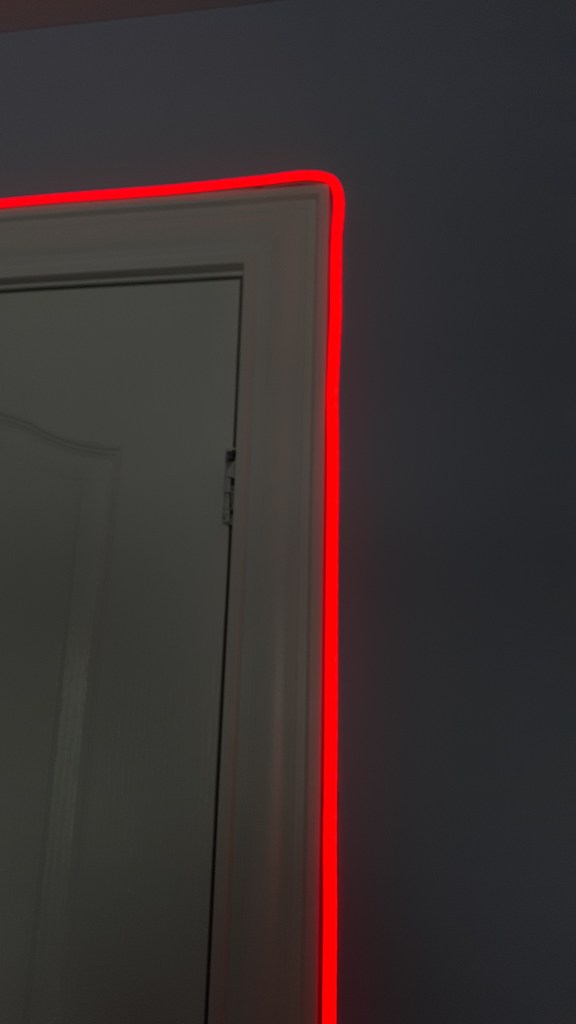
Red lights are put on for battle scenes or arguments: any time when anger or very strong energetic emotions are at play.

I use green light (or sometimes light blue) for calm, nature-y scenes. Green is for when the emotion is relaxed and serene.
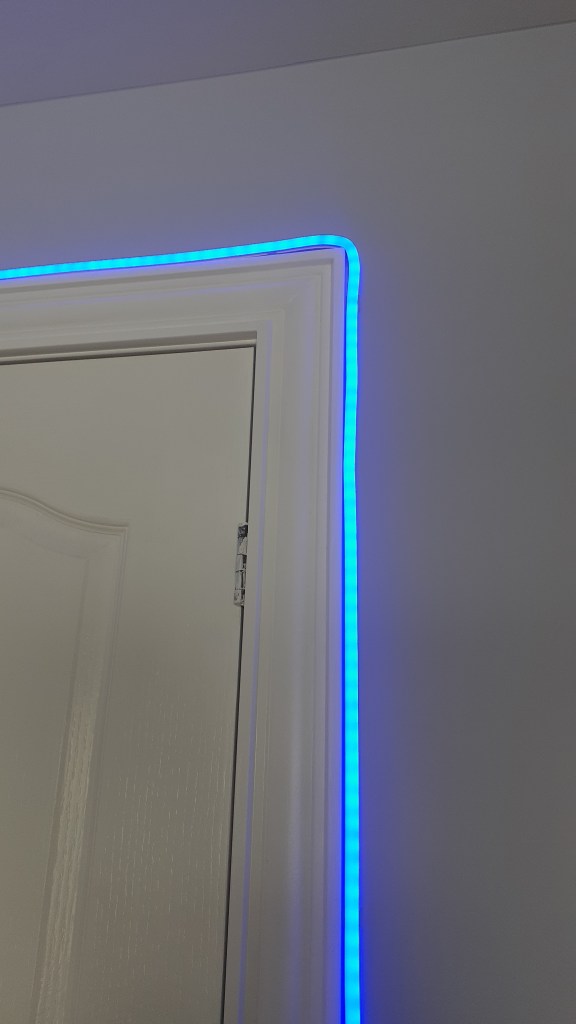
However, dark blue light is for sad scenes: death, or moments of vulnerability, or anytime when there could be tears.

I use a variety of different colours depending on the moment: yellows, oranges, purples, but the three on top are the most common light colours I use. (I rarely ever use the rainbow function on my LEDs… maybe for celebration/victory scenes? That’s an idea…)

Music and Sounds

I use two different platforms for my auditory atmosphere. I use YouTube as well as Ambient Mixer.

YouTube has a bunch of different classical/ambient playlists that can last from a half-hour to over ten hours. My favourite channel is called nobody and they have lots of playlists that range from energetic to white noise, and I love it. My current listen is called ‘you’re listening to the moon sing for 10 hours, 17 minutes, and 10 seconds’. I’m about halfway through, but paired with Ambient Mixer soundscapes, it makes a truly great experience.

My next step after this playlist (or any other YouTube playlist I’m using) is to put on an Ambient Mixer soundscape. Sometimes these soundscapes have music, sometimes they don’t. Another thing that’s great about Ambient Mixer is that if there’s one particular sound (for example, a scraping of some sort) that you don’t like, but everything else in that soundscape you do like, you can change it out for something else, or even mute it! You have complete control over what sounds you hear, how often, and even how loud or soft certain sounds are! It’s also completely free to use.

My current favourite is called ‘Sleepy coffee shop on a rainy day’.

Food/Drink

I typically don’t eat while I’m writing but I do make sure I’m fed. I enjoy drinking tea while I write but sometimes if I forget the tea is there and I’m absorbed into my writing it can get cold faster than I’d like it to…


A small update on Scarred:

The publication date is set to April 15th! I will share the cover design as soon as I can but from what I know so far it is super cute!

And that’s all! Thank you so much for reading! Subscribe so you can see future posts as they come out, and leave a comment and tell me what your writing routine is, if you have one of course! 🙂

Life is a story. How will you write yours?

Until next time,

Catherine Khaperska

Author Highlight! Lucy Maud Montgomery

Lucy Maud Montgomery is one of the most famous Canadian writers of all time. She’s written numerous books about life on Prince Edward Island, specifically Cavendish, on PEI’s lovely North Shore. Today I will share her story.

Lucy Maud Montgomery was born on November 30th, 1874, to Hugh Montgomery and Clara Macneill, in Prince Edward Island. Her mother died when she was very young, and she ended up living with her grandparents. Her father left and moved to the prairies, where he remarried and made a new life for himself.

Young Lucy found herself reading and writing a lot. Living with her grandparents was hard, but she visited Green Gables a lot. If this name sounds familiar, that’s because it’s this house that inspired the location for her most famous novel, Anne of Green Gables. Green Gables was the house that Lucy’s cousins lived in. 

From 1890 to 1891, Lucy Maud Montgomery went to Saskatchewan to visit her father and his wife, but became homesick for PEI, and so she returned to Cavendish. However it was not all useless, she published ‘On Cape LaForce’ in a PEI newspaper while she was in Saskatchewan. 

After grade school, she would go on to get a teacher’s licence in 1894 at the Prince of Wales college, graduating with honours. She taught at multiple schools over the course of her life before going to mainland Nova Scotia to study English Literature at Dalhousie University, being one of few women who went to seek higher education (granted, this was the 1890s). However in 1898 she returned to Cavendish after her grandfather’s death to take care of her grandmother.

At this time she was writing a lot of short stories and poetry, and managed to generate a pretty good income, earning 500 dollars from her writing by 1903. This doesn’t seem like a lot of money in the modern day, but in 1903 this was a very good, considerable chunk of cash. 

In 1905 she wrote Anne of Green Gables and sent it to numerous publishers, however was rejected by all of them. Two years later, in 1907, she decided to rewrite Anne of Green Gables and send it out again. It was finally published in 1908. 

To use modern terms, it went viral. Anne of Green Gables became an instant hit. 

Lucy had two romances before getting married. The first being to her third cousin (a very unhappy engagement that was) and the second being a short but intense romance between her and a man named Herman Leard. After her grandmother’s death in March 1911, Lucy Maud Montgomery was married to Reverend Ewan MacDonald in July 1911, after a secret engagement that lasted since 1906. 

Lucy and her husband had three kids, including one that was stillborn. The first World War, along with her husband’s declining mental health and the death of her sons and cousin/closest friend Frede Campbell, took a great toll on her. During this time, she kept many journals and kept writing poetry and short stories. 

She moved to Ontario with her family in 1926 and when she died on April 24, 1942, she was buried in her beloved home province of PEI. The cemetery in which she is buried exists to this day in Cavendish, PEI.

(Sources: https://lmmontgomery.ca/about/lmm/her-life

Lucy Maud Montgomery wrote much more than just Anne of Green Gables. She’s had numerous short stories and poems published in many different places, as well as having written a lot of novels. 

Anne’s life story is written in eight books. 

In terms of story chronology: 

Anne of Green Gables (1908) 

Anne of Avonlea (1909)  

Anne of the Island (1915) 

Anne of Windy Poplars (1936) 

Anne’s House of Dreams (1917) 

Anne of Ingleside (1939) 

Rainbow Valley (1919) 

Rilla of Ingleside (1921)

Rainbow Valley and Rilla of Ingleside follow the story of Anne’s children rather than herself, but they are still memorable books that have charmed the hearts of millions all over the world. I remember being about ten or so years old and willing to give up almost a year of allowance money to buy the entire series. Worth every penny. 

Anne’s story isn’t the only one Lucy Maud has written. 

The Emily trilogy is made up of Emily of New Moon (1923), Emily Climbs (1925), and Emily’s Quest (1927). It’s about a girl named Emily Starr who goes to live with her aunts and cousin after she is left an orphan. 

As well, L. M. Montgomery has a lot of stand-alone novels. Some have sequels, some don’t. Some of her more famous works involve: 

The Blue Castle (1926) 

The Story Girl (1911) 

A Tangled Web (1931) 

Jane of Lantern Hill (1937)

Pat of Silver Bush (1933)/Mistress Pat (1935)

The Golden Road (1913) 

Kilmeny of the Orchard (1910)

Magic for Marigold (1929)

And much, much more. 

Lucy Maud Montgomery has gotten so much recognition that her childhood home and inspiration for her debut novel has become National Historic Sites. 

The Green Gables Heritage Place in Cavendish, Prince Edward Island has been visited by many people from all across the world – me included. There are two trails (Haunted Wood and Lovers Lane) that are featured in the Anne series many times. You can enter the actual Green Gables house that has now been turned into a museum, and contains items that would have been used in the time period that Anne of Green Gables takes place in, such as slates, wood stoves, porcelain crockery (plates and bowls, etc), and dresses of the ‘latest fashions’ of the time. 

Recently they have added an interactive display in the Visitors Centre that shows Lucy’s story as well. The gift shop has all sorts of lovely Anne merchandise, and you can buy the iconic raspberry cordial in shops all over PEI. 

As well, the birthplace of Lucy Maud Montgomery in New London, PEI has been turned into a historic site. It’s not as popular as Green Gables is, but it still goes to show just how important and influential of a person Lucy Maud was. 

As I’ve said before, Lucy Maud Montgomery is one of the most influential and well-known Canadian classical authors. She has a very lyrical, poetic style of writing and puts a bit of herself and her experiences in every story. Her vivid imagination shines through her works and she has immortalised the beautiful Prince Edward Island for decades and generations to come. 

I hope her story inspires you as it did to me and many others across the world. 

Thanks for reading! Subscribe so you can see future posts as they come out, and leave a comment and tell me if you’ve read the books, visited the Historic Sites, or plan to do either (if you feel so inclined!).

Life is a story. How will you write yours?

Until next time,

Catherine Khaperska